Understanding Vector Hand Drawn Watercolor Stroke: A Practical Guide for Designers
In the realm of digital illustration and graphic design, the pursuit of organic texture often clashes with the need for scalable precision. This is where the Vector Hand Drawn Watercolor Stroke emerges as a critical resource. Unlike standard geometric shapes or rigid digital lines, this style mimics the fluidity, unpredictability, and soft edges of traditional watercolor painting while retaining the mathematical scalability of vector graphics. For designers aged 20 to 50 who are evaluating resources for branding, editorial layouts, or web assets, understanding the specific utility and limitations of these strokes is essential for making informed purchasing decisions.
The core value proposition of a Vector Hand Drawn Watercolor Stroke lies in its hybrid nature. It captures the aesthetic charm of hand-painted media—blending, bleeding, and varying opacity—without the resolution constraints of raster images. When you acquire a comprehensive package containing AI, EPS, PNG, SVG, and Preview JPEG files, you are essentially securing a versatile toolkit that bridges the gap between artistic expression and technical requirement. However, before integrating these assets into a workflow, it is necessary to examine how they compare to other texturing methods and determine if they align with your specific project goals.
Defining the Distinctive Qualities of Watercolor Vectors
To appreciate why a designer might choose a Vector Hand Drawn Watercolor Stroke, one must first distinguish it from its counterparts. Traditional watercolor relies on the physical interaction of pigment, water, and paper. In a digital context, this effect is often simulated using Photoshop brushes or scanned textures. While these raster-based methods offer high fidelity to the original medium, they suffer from a fundamental limitation: they cannot be resized without losing quality. Zooming in reveals pixelation, and scaling up results in blurriness.
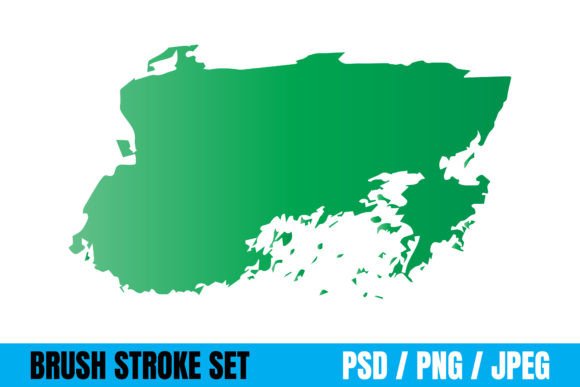
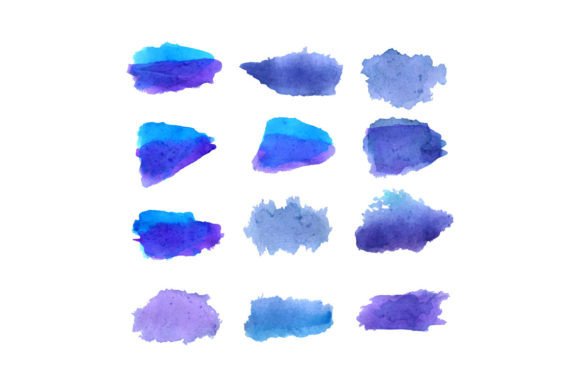
Conversely, a Vector Hand Drawn Watercolor Stroke uses mathematical paths to define the shape of the brush mark. The "watercolor" effect is achieved through complex gradient meshes, transparency masks, and layered color fills within the vector software. This allows the stroke to maintain crisp edges and smooth gradients at any size, from a small mobile app icon to a massive billboard. The distinctiveness of this format is not just about scalability; it is also about editability. With a vector file, a designer can adjust the hue of a blue watercolor stroke, change its opacity, or even modify the path of the brush itself without degrading the image quality.
Comparing Formats: Why File Variety Matters
When evaluating a design asset package, the included file formats are a primary indicator of versatility. A robust collection typically includes AI (Adobe Illustrator), EPS (Encapsulated PostScript), PNG (Portable Network Graphics), SVG (Scalable Vector Graphics), and JPEG previews. Each format serves a different stage of the design process, and understanding their roles helps in assessing the true value of the purchase.
- AI and EPS Files: These are the native vector formats. They are essential for professional workflows involving Adobe Illustrator or similar vector editors. They allow for full manipulation of the stroke's anchor points, colors, and blending modes. If your project requires customization—such as matching a specific brand color palette—these files are non-negotiable.
- SVG Files: As the web standard for vector graphics, SVGs are crucial for responsive web design. They ensure that your Hand drawn blue watercolor brush stroke design loads quickly and remains sharp on all screen densities, from retina displays to standard monitors. Unlike PNGs, SVGs are code-based, making them lightweight and easily animated via CSS.
- PNG Files: While vectors are superior for editing, PNGs provide immediate usability for non-vector environments. High-resolution PNGs with transparent backgrounds are ideal for quick mockups, social media posts, or presentations where opening vector software is impractical. They preserve the visual integrity of the watercolor texture without requiring specialized software.
- JPEG Previews: These serve as low-fidelity references for rapid selection. They help you visualize the stroke in a layout context before committing to the download of larger vector files.
Comparing this multi-format approach to single-format stock photos reveals a significant advantage in flexibility. A photographer selling a single JPG limits you to that specific resolution and orientation. A vector set empowers you to adapt the asset to various mediums, ensuring consistency across print and digital platforms.
Evaluating Tradeoffs: Artistic Authenticity vs. Digital Precision
While the benefits of vectorization are clear, there are tradeoffs to consider. The most significant is the potential loss of subtle, chaotic texture inherent in real watercolor. Real paint dries with microscopic variations in pigment density and paper grain that are difficult to replicate perfectly in vector form. Even the most sophisticated Vector Hand Drawn Watercolor Stroke can sometimes appear too clean or "digital" upon close inspection, especially when compared to a high-resolution photograph of actual paint.
Designers must weigh this factor against the need for scalability. If the project involves large-scale printing where viewers will stand several feet away, the vector version is likely indistinguishable from the real thing and offers superior production reliability. However, for macro photography-style illustrations or projects demanding extreme textural realism, a raster scan of an original painting might be the better choice, despite its resizing limitations.
Another consideration is the learning curve. Utilizing vector watercolor strokes effectively often requires familiarity with vector software. Adjusting mesh gradients or managing clipping masks to achieve the desired bleed effect takes more time than simply dragging and dropping a PNG. For clients seeking a "plug-and-play" solution with no customization, the PNG files included in the package may suffice, but the full potential of the asset remains locked behind the vector files.
Determining the Right Fit for Your Project
Deciding whether a Vector Hand Drawn Watercolor Stroke is the right resource depends heavily on the context of your work. These assets excel in scenarios where a balance between professionalism and approachability is required. They are particularly effective in branding for lifestyle brands, wellness products, children's education, and creative agencies that wish to convey human creativity without sacrificing modern polish.
Consider a scenario where you are designing a brochure for an eco-friendly product line. You want the design to feel natural and organic. Using a Hand drawn blue watercolor brush stroke design can soften the layout, adding a sense of flow and movement that rigid corporate typography lacks. Because the strokes are vector-based, you can scale them to frame headlines or wrap around product images without worrying about pixelation during the print run.
However, there are situations where this style may be inappropriate. In highly technical fields such as engineering, finance, or medical reporting, the organic and somewhat unpredictable nature of watercolor strokes can undermine the perception of precision and stability. In these contexts, clean lines, geometric shapes, or photographic imagery are often more suitable. Similarly, if a project requires a consistent, uniform texture across hundreds of pages, the variability of hand-drawn strokes might introduce visual inconsistency that is difficult to manage.
Strategic Integration and Workflow Efficiency
From a workflow perspective, having access to a complete package including AI, EPS, SVG, and PNG files streamlines the production process. It eliminates the need to convert files or hunt for compatible formats later in the project. For example, a web developer can immediately implement the SVG files for interactive elements, while the print designer works with the AI files to prepare press-ready artwork. This division of labor reduces bottlenecks and ensures that every team member has the correct tool for their specific task.
Furthermore, the ability to recolor vector strokes is a significant time-saver. Instead of creating new assets for each variation of a brand color, a designer can simply select the blue watercolor stroke and apply the client's specific hex code. This adaptability makes the Vector Hand Drawn Watercolor Stroke a cost-effective investment compared to commissioning custom illustrations for every minor design iteration.
Conclusion: Making an Informed Choice
The decision to utilize a Vector Hand Drawn Watercolor Stroke ultimately hinges on the specific needs of your project regarding scalability, editability, and aesthetic tone. These assets offer a unique solution for designers who need the warmth of traditional art within the constraints of digital production. By providing multiple file formats, they cater to both immediate implementation and deep customization, offering a level of flexibility that single-format alternatives cannot match.
While they may lack the microscopic imperfections of genuine wet-on-wet painting, their ability to remain crisp at any size and integrate seamlessly into modern design workflows makes them an invaluable resource. Whether you are refining a brand identity, enhancing a website, or preparing print materials, understanding the strengths and limitations of these vector strokes allows you to deploy them strategically. By carefully evaluating your project requirements against the capabilities of the available formats, you can ensure that the chosen assets enhance your design rather than complicate it.